Lugano
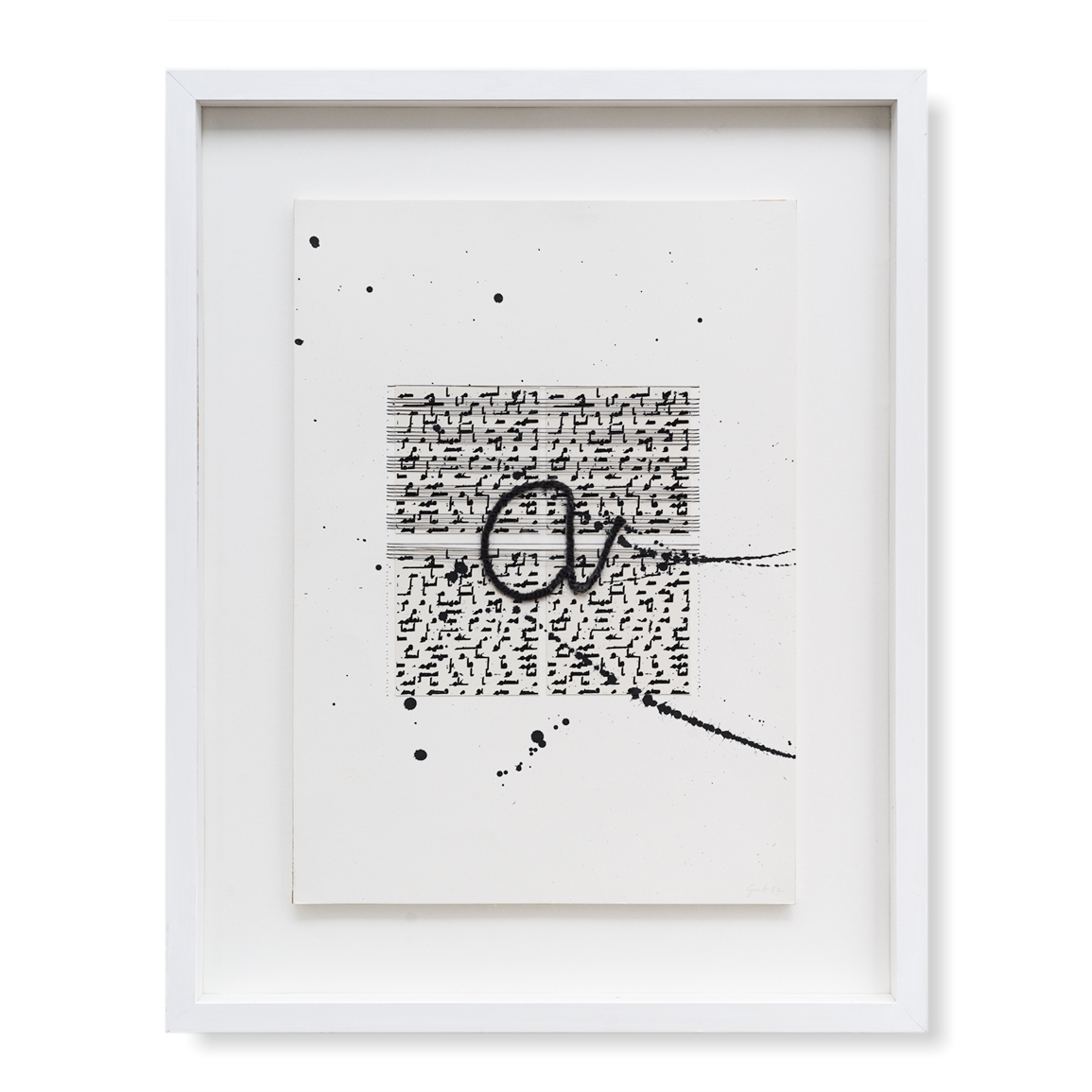
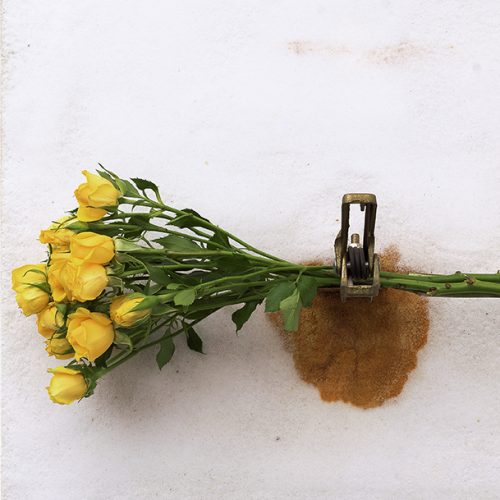
Untitled
1982
Mixed media on paper
50 x 35 cm
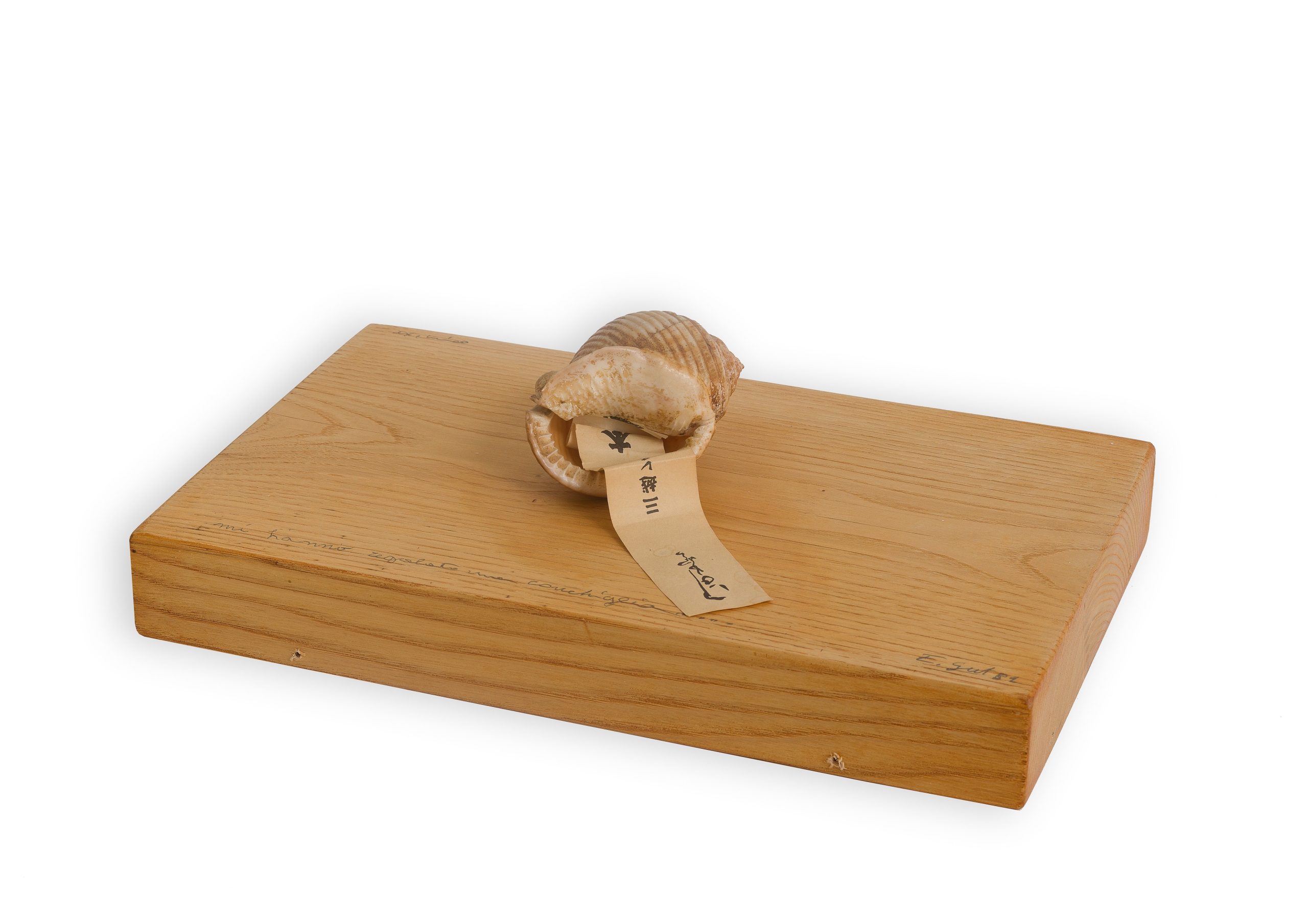
Mi hanno regalato una conchiglia
1981
wood, seashell and paper
23 x 35 cm
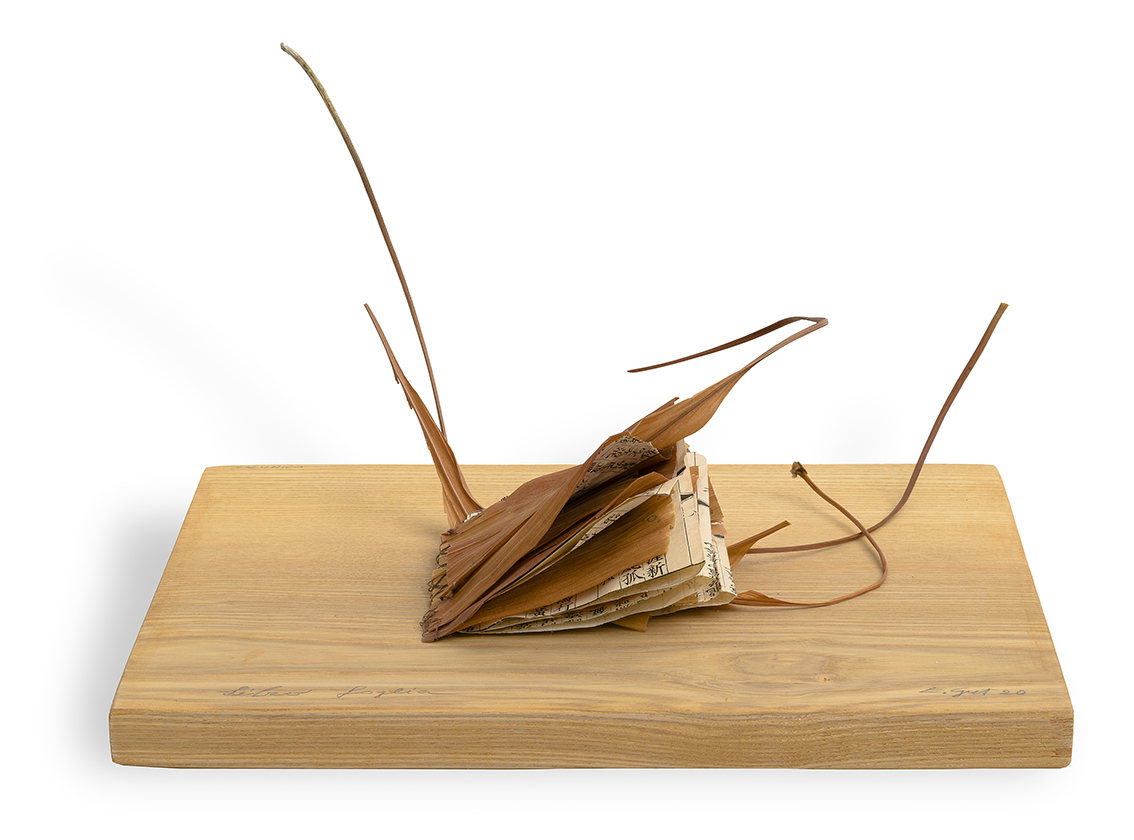
Libro foglia
2020
Wood, leaves and paper
28 x 34.5 x 28 cm
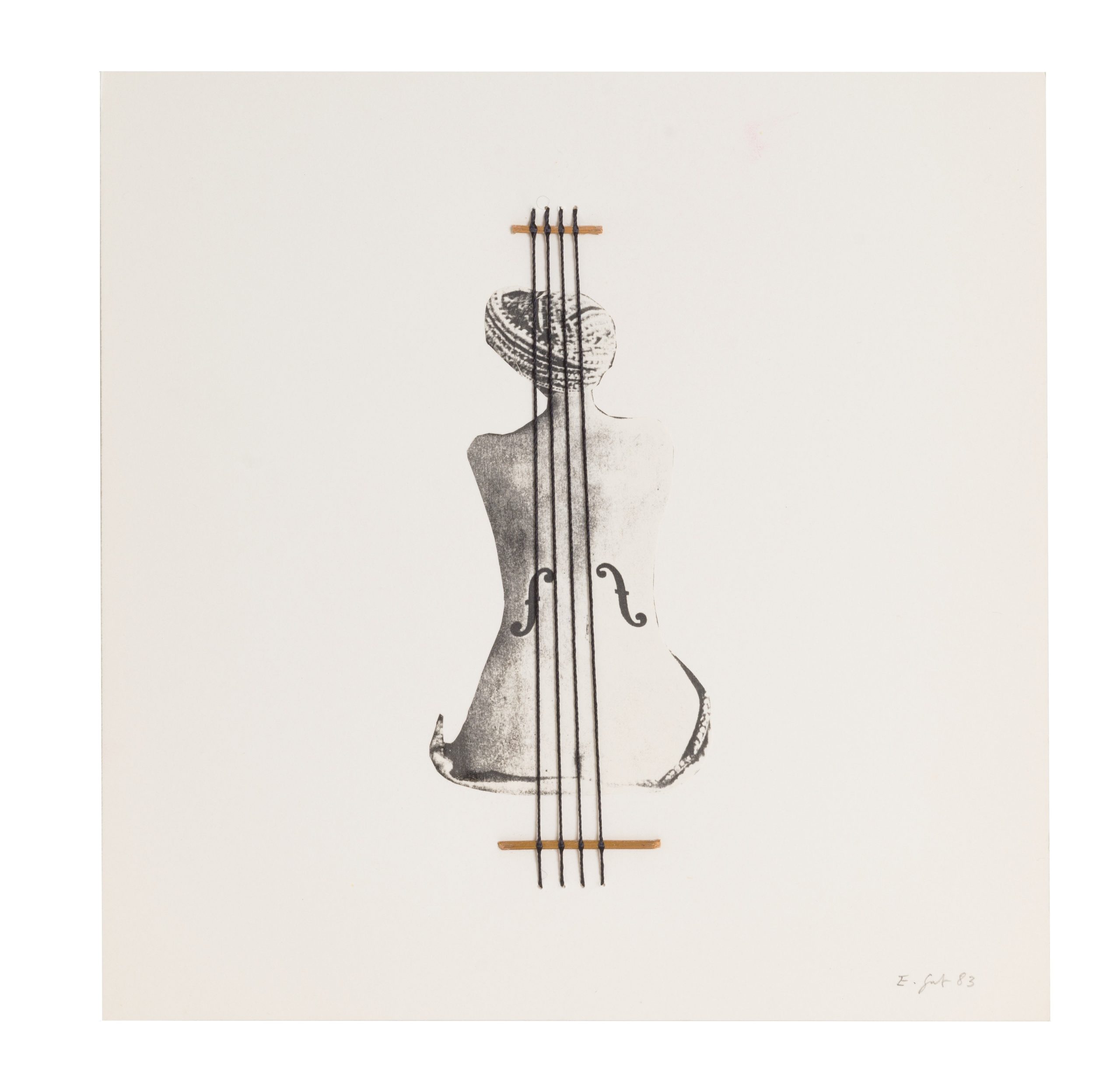
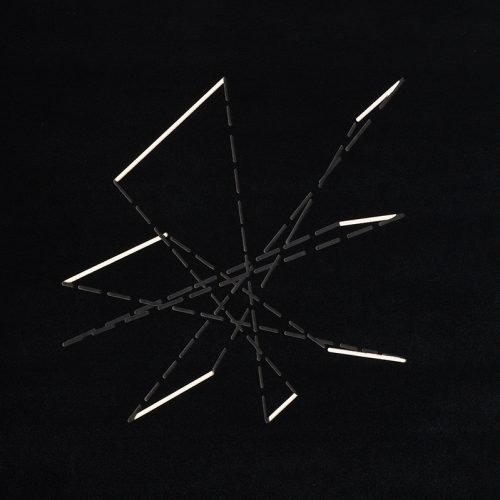
Serenata Man Ray
1983
Mixed media on paper
23,7 x 23,7 x 0,5 cm
Elisabetta Gut was born in Rome in 1934 into a large family of six sisters and one brother, to a Swiss father of Jewish origin and an Italian Catholic mother. With war approaching, while still a small child, she was sent to Zurich on one of the trains organised by Pro Juventute for the children of Swiss citizens, a tag hanging around her neck. After a period at boarding school she was taken in by a railway worker’s family and slept alone in an attic; of all her siblings she could see only her sister Rosa Bianca, with whom she spent weekends in the city’s museums, among Dadaists, Surrealists and abstract artists. Her first artistic love had a precise name: Paul Klee. These years of deep suffering ended in 1945 with the journey back to Rome; in a 2013 interview the artist still remembered the wooden carriages of that trip and the American soldiers who filled the children with chocolate.
Back in her father’s house, full of books, she read Rimbaud in secret. At seventeen she chose to live at the Ursuline Sisters’ institute in Rome, where she stood out for her stubbornness, her intelligent rebellion and above all her artistic talent. In 1953 she enrolled at the Istituto d’Arte in Rome and later at the Free School of the Nude of the Academy of Fine Arts, completing her training in 1956. Her early works followed a post-Cubist pictorial line, but the many drawings, pastels and watercolours of those years already reveal a graphic stroke recalling ancient and Eastern scripts, the “as if inked” sign that would characterise all her later work.
In 1956 she married the lawyer and director Luigi Martello, with whom she shared a passion for art, music and theatre, and began to frequent artists such as Lucio Fontana, Alberto Burri and Giuseppe Capogrossi. That same year came the meeting that launched her career: aged just twenty-two, she took her portfolios to Felice Casorati at his villa in Pavarolo, near Turin. Overcoming his initial scepticism, the painter was struck by her work and that autumn organised her first solo exhibition at the Galleria Cairola in Milan, writing the introduction to the catalogue. In 1958 her second solo show, at the Galleria Lo Zodiaco, was a success: half of the works on display were sold.
In the 1960s her research became more radical: she altered her supports, cut into canvases and transformed their surfaces with lace, embroidery and military insignia. There were also moments of discouragement, when the difficulty of being both a woman and an artist weighed heavily. In 1964 she made her first book-object, Diario (Diary), woven with memories of the family home, its late nineteenth-century furniture and curtains, and the books she had restored with her aunt Virginia. That same year she qualified to teach art and began teaching at the G. Ronconi State School in Rome; from 1965 she taught painting courses for Fulbright Foundation students. She presented her new work in solo exhibitions at the Galleria Il Carpine in Rome (1967) and the Galleria Vismara in Milan (1968).
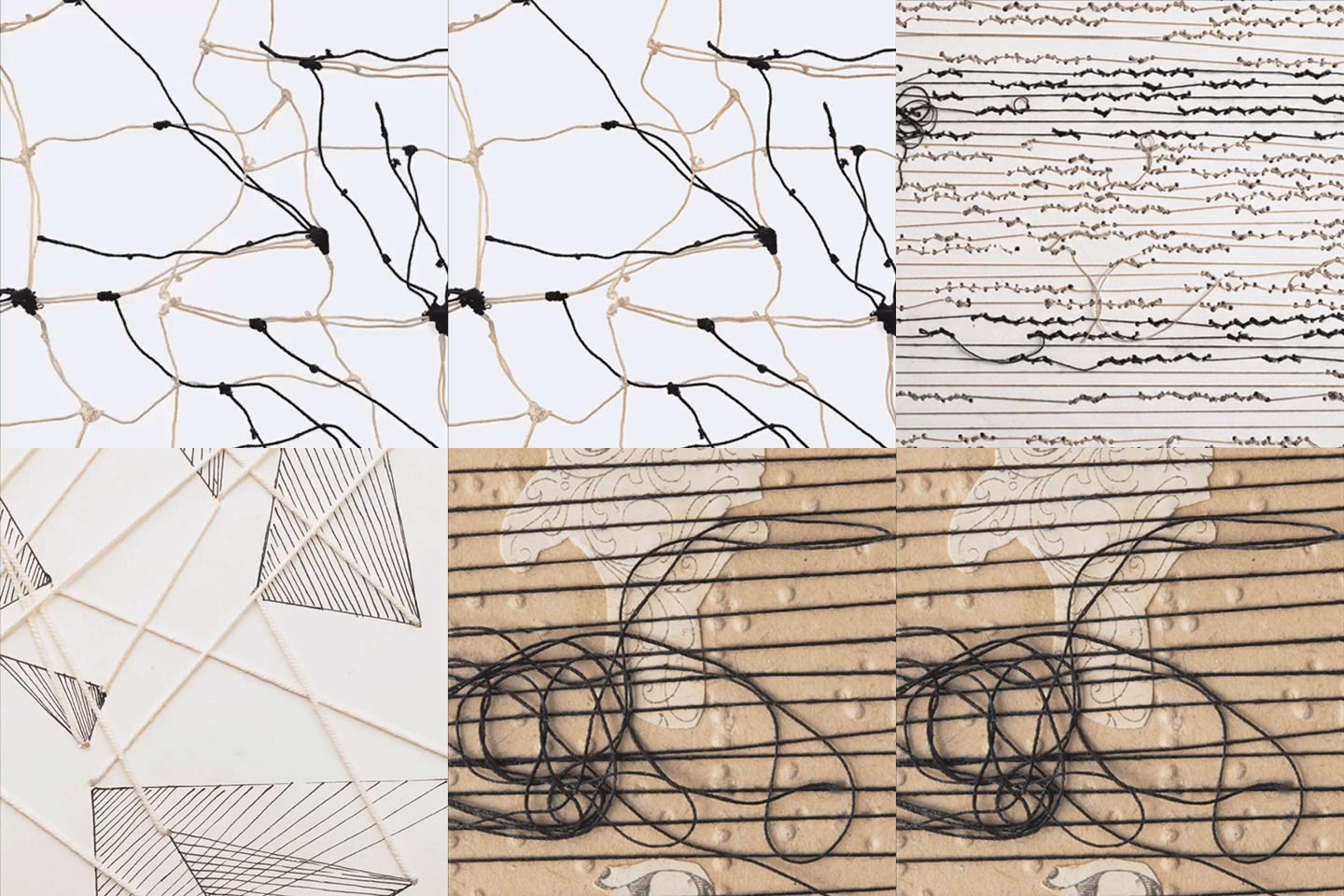
In the 1970s her work, now firmly part of visual poetry, reached the expressive freedom and ironic rebellion that characterised the artist herself. Bold combinations emerged, often as collages and assemblages of natural and cultural elements: branches, flowers, threads and shells sat alongside musical notes, verses and calligraphy. Thread, used here for the first time, served at once as binding, as a sign of erasure (for Gut more a “withholding of words” than a cancelling of them) and as a musical stave. Solo exhibitions multiplied, from the Galleria Franzp in Turin and the Galleria Numero in Rome (1970) to the Palazzo dell’Arengario in Monza (1973), the Galleria Fumagalli in Bergamo (1976), the Galleria Variazioni in Milan and the Museo Pignatelli in Naples (1977). Notable group shows included Incontro Sincron in Rimini (1971), curated by Bruno Munari, the Salon des Réalités Nouvelles at the Musée d’Art Moderne in Paris (1975) and Concrete & Visual at the universities of Sydney and Melbourne (1978).
These were also years of strong commitment to women’s rights: Gut belonged to the core of Rivolta Femminile, the group founded by Carla Lonzi that brought together artists and intellectuals such as Carla Accardi and Simona Weller.
From the mid-1970s Mirella Bentivoglio wrote numerous critical texts on her work and invited her to many of the exhibitions she curated, including Tra linguaggio e immagine (Between Language and Image) at the Galleria Il Canale in Venice (1976), Materializzazione del linguaggio (Materialisation of Language) at the Venice Biennale (1978), From Page to Space at Columbia University in New York (1979), Fil-sofia at the Metrònom in Barcelona (1982) and Volùmina in Senigallia (1988). Bentivoglio also curated Gut’s anthological exhibition at the Museo Civico in Macerata (1981) and Plume de poète at the Galleria Eralov in Rome (1989). Gut also took part in Arte come scrittura (Art as Writing) at the 11th Rome Quadriennale (1986), Fotoidea at the São Paulo Biennial (1994) and Post scriptum at the Biennale Donna in Ferrara (1998).
Her more recent solo exhibitions include Semi-Segni at the Galleria Cortese & Lisanti in Rome (2009), Book Without Words: The Visual Poetry of Elisabetta Gut at the National Museum of Women in the Arts in Washington (2010), Cutting Through: The Art of Elisabetta Gut at the Maitland Regional Art Gallery in Australia (2012) and La scuola delle cose (The School of Things) at the Museo delle Genti d’Abruzzo in Pescara (2019). Her works are held by MUSINF in Senigallia, MART in Trento and Rovereto, the Centro Pecci in Prato, MA*GA in Gallarate, the Maitland Regional Art Gallery and the National Museum of Women in the Arts in Washington. Elisabetta Gut died in Rome on May 16, 2024.
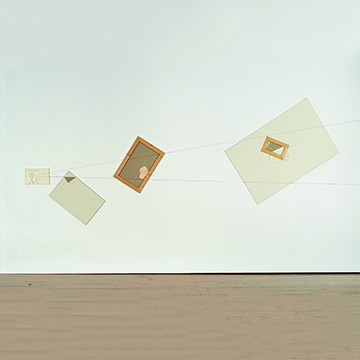
In 2019 Repetto Gallery presented Elisabetta Gut’s work in the exhibition Threading Spaces, alongside Maria Lai, Franca Sonnino and Nedda Guidi, and her works have also been shown in Alphabet – The Perfect Revolution (2020–2021) and Earth Art (2021). For information on available original works by Elisabetta Gut, contact the gallery.